 Video History Project
ETC History 1979-81
History 1979-80
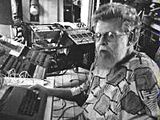
The processing system computer is the Z-2, an 8 bit system with an S-100 bus, and dual floppy drives. A CAT digital frame buffer is interfaced to the computer; at the time this is one of the only commercially available "low-cost" digital devices which incorporated concepts of video, and recordable signal output. The Z-80 is interfaced also with the analog box. Software begins to be developed for specific video uses. Artists working in residence include Alan Powell and Connie Coleman, Charles Atlas, Victor Velt, Jud Yalkut and Ren Weidenaar. "The Electronic Workshop", a series of lecture/demonstrations concerning image processing, was presented for 17 organizations around New York State. The Center moves to Owego.
History 1980-81
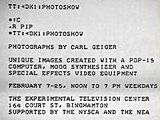
The need for artist-oriented software increases. The Print Program is developed by David Jones, allowing artists to develop videographic still frames, captured on disk, then printed out with variable gray level control. This is a natural extension of the use of video image processing as an "electronic darkroom" for photographic techniques, an area which was explored by a number of artists since the early 70s. Additional software is developed by graduate-level interns under the direction of Paul Davis and Ralph Hocking. Artists working at the Center include Dan Reeves and Jon Hilton, Celia Shapiro and Peter D'Agostino.
Summary
1979–80 equipment at the Center included a Z-2 8-bit computer with an S-100 bus, dual floppy drives and a CAT digital frame buffer; a Z-80 was also interfaced to an analog box and software development for video uses began. Artists in residence during 1979–81 included Alan Powell, Connie Coleman, Charles Atlas, Victor Velt, Jud Yalkut, Ren Weidenaar, Dan Reeves, Jon Hilton, Celia Shapiro and Peter D'Agostino; The Electronic Workshop series was presented to 17 organizations around New York State and the Center moved to Owego; in 1980–81 David Jones developed the Print Program for disk-captured videographic still frames with variable gray-level printing and additional software was produced by graduate interns under Paul Davis and Ralph Hocking.
Cite this record
"ETC History 1979-81." Video History Project, Experimental Television Center, 2011. https://www.videohistoryproject.org/etc-history-1979-81.
Download RIS citationSubmit a change or correction
Last modified 13 April 2011